Entertainment
Fanisco: Meaning, Company, Products, and What We Know in 2026


Chitty Chitty Film, widely known as Chitty Chitty Bang Bang, is a classic musical fantasy movie released in 1968. It tells the story of an imaginative inventor who discovers that an old racing car can do extraordinary things, including flying through the sky and floating on water. With its memorable music, entertaining characters, and magical adventures, the film has become a favorite among generations of movie lovers.
The movie combines family entertainment, comedy, romance, fantasy, and adventure in one exciting story. Whether you want to learn about the original movie, discover its famous actors, or understand why it remains popular, this guide covers the essential information about Chitty Chitty Bang Bang in 2026.
What Is Chitty Chitty Bang Bang Film?
Chitty Chitty Bang Bang is a British-American musical fantasy comedy film directed by Ken Hughes. It is based on the children’s novel Chitty-Chitty-Bang-Bang: The Magical Car, written by Ian Fleming and published in 1964. The screenplay was written by Roald Dahl and Ken Hughes, bringing the original adventure to the big screen with memorable songs and colorful storytelling.
The film was released in December 1968 and features a talented cast led by Dick Van Dyke and Sally Ann Howes. Its story focuses on a loving family, an unusual inventor, and a magical automobile that becomes the center of an unforgettable adventure.
The movie is especially famous for its imaginative vehicle, entertaining musical numbers, and unusual fantasy characters. It appeals to viewers who enjoy classic cinema, family adventures, and stories that celebrate creativity and imagination.
Chitty Chitty Film Story and Plot Explained
The story follows Caractacus Potts, an inventor who lives with his two children, Jeremy and Jemima, and his eccentric father, Grandpa Potts. Although Caractacus creates interesting inventions, he struggles to earn enough money from his work. One day, he decides to restore an old racing car that his children love.
After working hard to repair the vehicle, Caractacus transforms it into a beautiful automobile and names it Chitty Chitty Bang Bang. During a family outing, he tells his children and Truly Scrumptious a magical story about the car’s extraordinary powers. The vehicle can travel across water and fly through the air, turning an ordinary family adventure into an exciting fantasy.
The adventure becomes more complicated when Baron Bomburst, the ruler of Vulgaria, becomes interested in the magical car. His people accidentally capture Grandpa Potts, forcing Caractacus, Truly, and the children to travel to Vulgaria. There, they face the frightening Child Catcher and work with other characters to rescue the children and defeat the Baron’s cruel plans.
Chitty Chitty Bang Bang Cast and Characters
The talented cast is one of the main reasons why the movie remains memorable. Each actor brings a unique personality to the story, helping create a wonderful combination of comedy, musical entertainment, and fantasy adventure.
Here are the important actors and their characters:
- Dick Van Dyke as Caractacus Potts: The main character, a creative inventor and devoted father who restores the magical automobile.
- Sally Ann Howes as Truly Scrumptious: A kind and intelligent woman who develops a close relationship with Caractacus and his children.
- Lionel Jeffries as Grandpa Potts: Caractacus’s funny and adventurous father who becomes involved in the family’s journey.
- Gert Fröbe as Baron Bomburst: The greedy and unusual ruler of Vulgaria who wants to possess the magical car.
- Anna Quayle as Baroness Bomburst: The Baron’s wife, who dislikes children and supports the kingdom’s unusual rules.
- Benny Hill as the Toymaker: A helpful character who plays an important role in the children’s rescue.
- Robert Helpmann as the Child Catcher: One of the film’s most frightening characters, known for capturing children in Vulgaria.
- Heather Ripley as Jemima Potts: Caractacus’s daughter who joins the magical adventure.
- Adrian Hall as Jeremy Potts: Caractacus’s son who shares his sister’s excitement about the extraordinary vehicle.
The combination of these performances gives the film its special charm. From the funny inventions of Caractacus to the frightening appearance of the Child Catcher, the characters create memorable moments throughout the movie.
Famous Chitty Chitty Bang Bang Songs and Music
Music plays an important role in making Chitty Chitty Bang Bang a classic musical film. The famous Sherman Brothers, Richard M. Sherman and Robert B. Sherman, wrote the songs that bring energy, emotion, and entertainment to the story. Their music helps audiences connect with the characters and remember important scenes.
Some of the most popular songs from the film include:
- Chitty Chitty Bang Bang: The famous title song celebrating the magical automobile.
- Hushabye Mountain: A gentle and emotional musical number associated with comfort and family.
- Truly Scrumptious: A cheerful song connected with the film’s romantic storyline.
- Toot Sweets: A playful number featuring Caractacus’s unusual invention.
- Me Ol’ Bamboo: An energetic musical performance with lively dancing.
- Doll on a Music Box: A beautiful sequence featuring an elegant dance and music-box imagery.
- The Roses of Success: An uplifting song about learning from mistakes and finding opportunities through failure.
These musical performances make the movie entertaining for both children and adults. Even people who have not watched the entire film may recognize its famous title song and other memorable musical numbers.
Chitty Chitty Film Release Date, Director and Production Details
Chitty Chitty Bang Bang premiered in London on December 16, 1968, and opened in the United States on December 18, 1968. The movie was directed by Ken Hughes and produced by Albert R. Broccoli, who was also associated with the famous James Bond film series.
The film was based on Ian Fleming’s children’s novel and featured a screenplay written by Roald Dahl and Ken Hughes. Its musical songs were created by the Sherman Brothers, while its colorful production design and impressive visual effects helped bring the imaginary world to life.
Here are the main movie details:
| Film Details | Information |
|---|---|
| Full Movie Title | Chitty Chitty Bang Bang |
| Release Year | 1968 |
| Director | Ken Hughes |
| Producer | Albert R. Broccoli |
| Main Actor | Dick Van Dyke |
| Main Actress | Sally Ann Howes |
| Original Novel | Ian Fleming |
| Screenplay | Roald Dahl and Ken Hughes |
| Music and Lyrics | Sherman Brothers |
| Genre | Musical, Fantasy, Comedy |
| Language | English |
| Running Time | 145 minutes |
| Production Companies | Warfield Productions and Dramatic Features |
| Distributor | United Artists |
The movie was filmed using the Super Panavision 70 widescreen format, giving its fantasy locations and musical scenes a grand cinematic appearance.
Why Is Chitty Chitty Film Still Popular in 2026?
More than 50 years after its release, Chitty Chitty Bang Bang continues to attract attention from classic movie fans and families. Its central themes of imagination, family love, courage, and creativity are still meaningful to modern audiences. The story reminds viewers that ordinary ideas can become extraordinary when people use their imagination.
The magical car is another major reason for the movie’s lasting popularity. Its ability to fly and float on water creates an exciting fantasy that appeals to children and adults alike. The unusual villains, beautiful musical performances, and colorful settings also help make the film different from many other classic movies.
The movie’s popularity has extended beyond cinema through stage musical adaptations and television presentations. Its recognizable songs and characters continue to introduce the story to new generations, keeping its legacy alive in 2026.
Where Can You Watch Chitty Chitty Bang Bang Film in 2026?
People who want to watch the original Chitty Chitty Bang Bang film can check legitimate streaming services, digital rental platforms, and physical movie collections. The availability of the movie depends on the country, licensing agreements, and the current catalogue of each entertainment platform.
You can search for the film on services such as Prime Video and Apple TV to check whether rental or purchase options are available in your region. DVD and Blu-ray editions may also be available through movie retailers and online marketplaces.
Before choosing a platform, check the movie’s audio language, subtitle options, picture quality, and rental conditions. This will help you find the version that best matches your viewing preferences.
Frequently Asked Questions About Chitty Chitty Film
1. What is the full name of Chitty Chitty film?
The full title is Chitty Chitty Bang Bang. It is a 1968 musical fantasy comedy film based on Ian Fleming’s children’s novel.
2. Who is the main actor in Chitty Chitty Bang Bang?
Dick Van Dyke plays Caractacus Potts, the imaginative inventor and father who restores the magical car. Sally Ann Howes plays Truly Scrumptious.
3. Who directed Chitty Chitty Bang Bang?
Ken Hughes directed the film. He also co-wrote the screenplay with famous children’s author Roald Dahl.
4. When was Chitty Chitty Bang Bang released?
The movie premiered in London on December 16, 1968, and opened in the United States on December 18, 1968.
5. Is Chitty Chitty Bang Bang based on a true story?
No, the movie is a fictional fantasy adventure based on Ian Fleming’s 1964 children’s book. The magical car and the kingdom of Vulgaria are elements of the imaginative story.
6. What makes the Chitty Chitty Bang Bang car special?
The car has extraordinary magical abilities. It can float on water and fly through the sky, allowing the characters to experience adventures that would be impossible with an ordinary automobile.
7. How long is Chitty Chitty Bang Bang?
The original film has a running time of approximately 145 minutes, which is around two hours and 25 minutes.
8. Is Chitty Chitty Bang Bang suitable for children?
Yes, the film is generally considered family-friendly and originally received a G rating in the United States. However, younger children may find the Child Catcher character frightening.
Conclusion
Chitty Chitty Film, better known as Chitty Chitty Bang Bang, is a wonderful example of classic musical fantasy cinema. Its entertaining storyline, talented cast, magical automobile, and unforgettable songs have helped it remain a favorite among movie lovers for generations.
Whether you are interested in its famous actors, exciting story, musical performances, or production history, this 1968 movie offers plenty to discover. Even in 2026, Chitty Chitty Bang Bang remains a memorable family adventure that celebrates imagination, creativity, and the power of believing in extraordinary possibilities.

Learning to play the violin is a rewarding journey that combines music, creativity, and patience. Whether you dream of playing classical music, performing your favorite songs, or developing a new hobby, violin lessons can help you build the skills needed to enjoy this beautiful instrument.
With the right guidance and regular practice, beginners can gradually learn proper technique, read music, and play simple melodies. This guide explains everything you need to know about violin lessons, from choosing a teacher to developing an effective practice routine.
What Are Violin Lessons?
Violin lessons are structured music classes that teach students how to play the violin correctly and confidently. They usually cover instrument handling, bow technique, finger placement, music reading, rhythm, and musical expression.
Lessons can be personalized according to a student’s age, experience, and goals. Beginners focus on basic skills, while intermediate and advanced learners develop more complex techniques and improve their performance abilities.
Why Should You Take Violin Lessons?
Taking violin lessons helps students develop proper playing habits from the beginning. A qualified teacher can correct posture, bow movement, and finger placement before common mistakes become difficult to change.
Violin lessons also encourage discipline, patience, concentration, and creativity. Students learn to set goals, practice consistently, and appreciate the process of improving their musical abilities over time.
Violin Lessons for Beginners
Beginner violin lessons are designed for students with little or no previous musical experience. The first stages usually involve learning the parts of the violin, holding the instrument comfortably, and understanding how to produce a clear sound.
Students gradually learn open strings, basic finger positions, simple rhythms, and beginner melodies. The focus is on building a strong foundation rather than playing difficult songs too quickly.
What Will You Learn in Your First Violin Lesson?
Your first violin lesson typically introduces the instrument and explains how to hold it safely and comfortably. The teacher may demonstrate bow grip, basic posture, and simple movements used to produce sound.
You may also learn how to tune the violin, identify its four strings, and play a few open-string notes. The exact lesson plan depends on your experience and the teaching approach.
Violin Lessons for Children
Violin lessons can be an enjoyable musical activity for children when they are taught through age-appropriate methods. Young learners often benefit from short exercises, simple songs, games, and positive encouragement.
A teacher can help children develop listening skills, coordination, rhythm, and confidence. Choosing the correct violin size is also important because a properly fitted instrument makes learning more comfortable.
Violin Lessons for Adults
Adults can begin learning the violin at any age, even without previous music experience. Adult beginners often appreciate structured lessons that fit around work, family responsibilities, and personal schedules.
Lessons can focus on personal goals, such as playing favorite songs, learning classical pieces, or enjoying music as a relaxing hobby. Consistent practice and realistic expectations are more important than age.
Online Violin Lessons vs. In-Person Lessons
Online violin lessons allow students to learn from home through video calls, recorded tutorials, and digital learning resources. They can be convenient for people with busy schedules or limited access to local music teachers.
In-person violin lessons provide direct feedback on posture, bow technique, and sound production. Both options can be effective, but beginners may benefit from live teacher guidance to establish correct physical habits.
How to Choose the Right Violin Teacher
Choosing a suitable violin teacher can make a significant difference in your learning experience. Look for someone with strong musical knowledge, teaching experience, and the ability to explain techniques clearly.
A good teacher should understand your goals, provide constructive feedback, and create a lesson plan suited to your progress. A trial lesson can help you decide whether the teaching style feels comfortable and motivating.
How Much Do Violin Lessons Cost?
The cost of violin lessons depends on several factors, including the teacher’s experience, lesson duration, location, and whether classes are private or group-based. Online lessons may have different pricing structures from traditional music schools.
Some teachers offer individual lessons, monthly packages, or introductory sessions. Before enrolling, ask about lesson length, practice expectations, cancellation policies, and whether instrument rental is available.
How Often Should You Take Violin Lessons?
Many beginners start with one lesson per week, allowing enough time to practice and review what they learned. The ideal schedule depends on the student’s goals, availability, and learning pace.
Regular lessons help students receive feedback and stay motivated. Between classes, short and focused practice sessions can reinforce technique and make each lesson more productive.
A Simple Violin Practice Routine for Beginners
Consistent practice is essential for improving violin skills. Beginners can start with a manageable daily routine of approximately 15–20 minutes and gradually increase practice time as their comfort and stamina improve.
A simple routine may include:
- 3–5 minutes of posture and bow-hold practice
- 5 minutes of open strings and basic technique
- 5 minutes of scales or finger exercises
- 5 minutes of reviewing a simple song
Practicing slowly and carefully helps build accuracy. If a passage feels difficult, break it into smaller sections and repeat each part before attempting the entire piece.
How Long Does It Take to Learn the Violin?
Learning the violin takes time because students must coordinate both hands while listening carefully to pitch and tone. Some beginners can play simple melodies within a few weeks or months, depending on their practice and instruction.
Developing consistent intonation, smooth bow control, and confident performance usually requires longer-term effort. Progress varies from person to person, so setting small achievable goals is a helpful way to stay motivated.
Common Challenges in Learning the Violin
Beginners may initially find it difficult to produce a smooth sound, place fingers accurately, or coordinate bow movements with rhythm. These challenges are a normal part of learning the instrument.
A teacher can help identify the cause of problems and suggest exercises to improve technique. Regular practice, patience, and careful listening gradually make playing feel more natural.
Benefits of Learning the Violin
Violin lessons offer more than musical skills. Learning an instrument can support concentration, memory, coordination, creativity, and self-confidence.
Playing music can also provide enjoyment and opportunities to connect with others. Students may eventually participate in school performances, orchestras, chamber groups, or informal music sessions with friends.
Frequently Asked Questions About Violin Lessons
Can I learn violin without previous music experience?
Yes. Beginner violin lessons are designed for students who have never played an instrument. Teachers introduce music reading and playing techniques step by step.
Are online violin lessons good for beginners?
Online lessons can be helpful when they include clear demonstrations and regular feedback. Beginners should make sure their teacher can observe posture, bow movement, and finger placement during lessons.
Do I need to buy a violin before starting lessons?
Not necessarily. Some music schools and teachers offer instrument rental options for beginners. It is helpful to ask about violin size and setup before purchasing an instrument.
How many minutes should I practice violin daily?
Many beginners benefit from 15–20 minutes of focused practice on most days. Practice time can increase gradually as skills and stamina develop.
Is violin difficult to learn?
The violin can be challenging at first because producing a clear tone and playing in tune requires coordination and careful listening. With structured lessons and consistent practice, beginners can make steady progress.
Conclusion
Violin lessons provide a structured and enjoyable way to learn one of the most expressive musical instruments. Whether you are a child, an adult beginner, or someone returning to music, the right teacher and practice routine can help you develop strong playing skills.
By starting with the basics, practicing regularly, and setting realistic goals, you can gradually improve your technique and enjoy playing meaningful music. The most important step is to begin learning with patience, curiosity, and a genuine love for music.
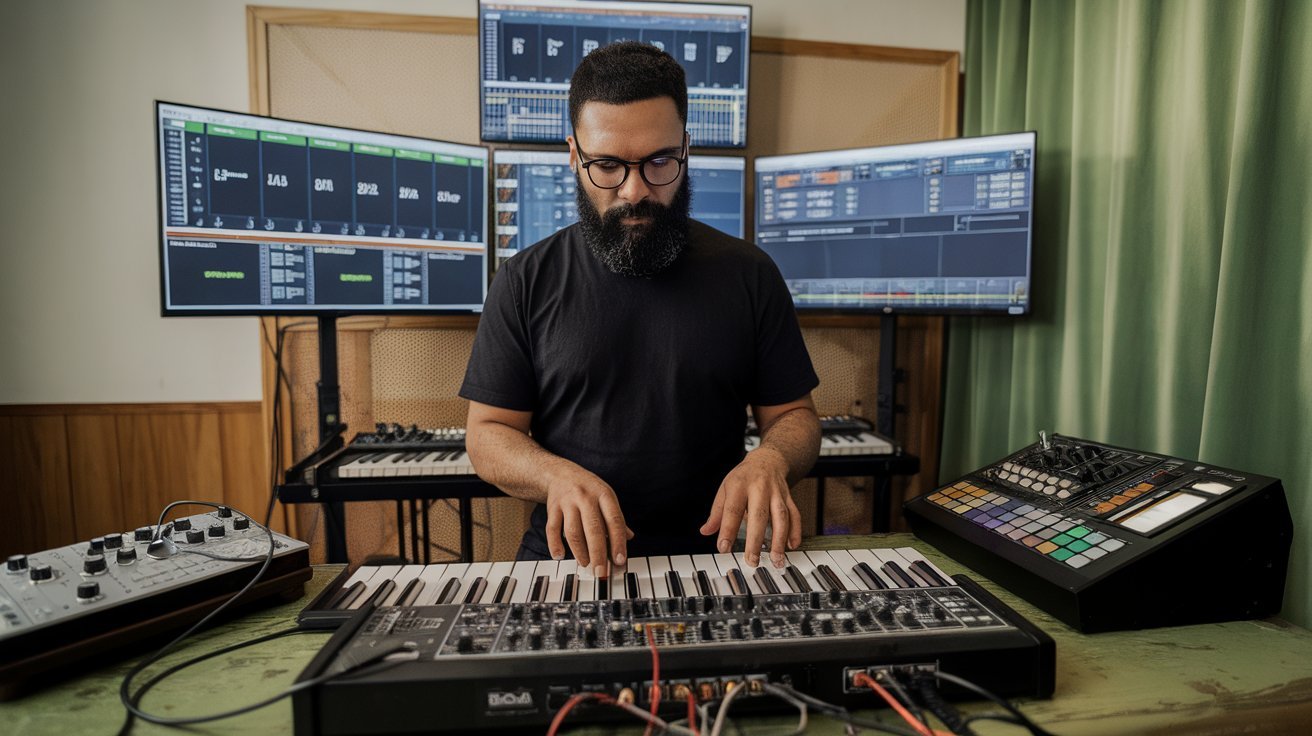
Learning how to breakcore on BandLab is an excellent way to experiment with extremely fast drums, chopped breaks, aggressive bass, distorted textures, glitch effects, and unpredictable arrangements without needing an expensive studio setup. BandLab Studio is a cloud-based DAW that works in a browser or on mobile, and it provides tools for recording, editing, effects, sampling, drum programming, and automation.
Breakcore can initially sound complicated because the genre often combines very fast tempos, rapidly edited breakbeats, heavy processing, and constantly changing rhythms. However, the basic workflow becomes much easier when we build the track in layers: tempo first, drums second, bass and atmosphere next, then aggressive edits and automation.
1. Start a Breakcore Project in BandLab
We begin by opening BandLab Studio and creating a new project. BandLab currently supports projects with multiple audio and MIDI tracks, making it possible to separate drums, bass, melodies, effects, vocals, and atmospheric sounds.
For a traditional breakcore foundation, we can start around 160–200 BPM. A tempo near 170–180 BPM is a useful starting point because it gives the drums enough speed while leaving room for rhythmic experimentation.
The exact BPM is not a strict rule. What matters more is the feeling of acceleration and rhythmic density.
A basic project might contain:
- Breakbeat or drum track
- Kick and snare layer
- Bass track
- Main sample or melody
- Atmospheric texture
- Glitch or FX track
- Transition and impact sounds
Keeping these elements on separate tracks gives us much greater control when editing and processing the song.
2. Build Fast Breakcore Drums With the Drum Machine
The drums are the heart of breakcore. Instead of relying on a simple four-on-the-floor pattern, we want constantly changing kick, snare, hi-hat, and percussion combinations.
BandLab’s Drum Machine allows us to create patterns directly on a grid. We can create 1-, 2-, or 4-bar patterns, adjust velocity, use swing, and create multiple patterns that can be arranged throughout the project.
We can start with a simple breakbeat and then make it progressively more complicated.
For example:
Kick → snare → kick → kick → snare
Once the basic rhythm works, we can add:
- Rapid hi-hat rolls
- Additional snares
- Ghost hits
- Short kick bursts
- Percussion fills
- Offbeat hits
- Sudden gaps
- Repeated one-beat patterns
The important technique is variation. A breakcore track becomes much more energetic when the rhythm changes every few bars instead of repeating exactly the same loop.
We can create several Drum Machine patterns and alternate between them. BandLab also allows patterns to be copied, pasted, added to the arrangement, and looped.
3. Chop Breakbeats and Create Extreme Drum Patterns
For a more authentic breakcore sound, we can work with breakbeat samples rather than programming every drum hit from scratch.
BandLab Sounds provides a large collection of loops, samples, and one-shots that can be brought directly into Studio.
Once a breakbeat is inside the project, we can cut it into smaller sections and rearrange those sections.
A useful approach is to divide the break into tiny pieces:
Kick → snare → hi-hat → snare → kick → silence → snare
Then repeat, reverse, or reposition selected pieces.
The goal is not simply to make the drum pattern fast. We want to create the impression that the break is being manipulated in real time.
We can also layer programmed drums underneath the chopped break. This gives us more control over the low-end punch while the break provides the frantic rhythmic character.
BandLab’s current Sampler is particularly useful here because it allows us to build custom 16-pad sample kits, import our own sounds, or choose sounds from BandLab Sounds. Individual samples can also be edited for pitch, volume, pan, attack, release, and tone.
4. Add Bass, Distortion, and Aggressive Sound Design
Once the drums are moving, we can create the bassline.
Breakcore bass does not necessarily need to be complicated. A short, aggressive bass phrase can work extremely well when it follows the kick and changes with the drum arrangement.
We can experiment with:
- Distorted bass
- Reese-style bass textures
- Short sub-bass notes
- Metallic bass sounds
- Saturated synths
- Pitch-modulated bass
- Glitchy low-frequency effects
BandLab provides virtual instruments that allow us to create sounds without physical instruments. Its current Studio includes hundreds of professionally designed virtual instruments covering categories such as synthesizers, drums, pianos, guitars, and orchestral sounds.
After creating the bass, we can use effects to make it more aggressive. BandLab currently supports multiple effects per track, allowing us to combine processing tools for creative sound design.
A useful chain might involve EQ → distortion → compression → reverb or delay, although we should adjust each effect according to the specific sound rather than applying every effect automatically.
5. Use Glitches, Stutters, Reverses, and Sudden Changes
The biggest difference between a fast electronic beat and a convincing breakcore track is often the editing.
We can create movement by suddenly:
- Cutting the drums
- Repeating a tiny section
- Reversing a sound
- Pitching a sample upward
- Pitching a sample downward
- Adding a short burst of distortion
- Creating silence before a drop
- Switching between different drum patterns
- Removing the kick for a few beats
- Bringing everything back at full intensity
BandLab’s mobile Looper also includes performance effects such as Filter, Gater, Stutter, and Tape Stop, which can be useful for generating transitions and experimental rhythmic moments.
We should avoid making every second chaotic. Strategic contrast makes the fastest sections feel even more powerful.
For example, we might create a relatively simple eight-bar introduction, followed by an extremely dense 16-bar breakcore section.
That contrast gives the listener somewhere to go.
6. Automate Effects for More Movement
Automation is one of the most valuable tools when learning how to make breakcore on BandLab.
Instead of leaving an effect at one fixed setting, we can automate parameters over time. BandLab currently supports automation for parameters such as volume, pan, and FX controls, either by manually drawing automation points or recording movements from a MIDI controller.
We can automate a filter so that it gradually opens before a drop.
We can automate volume to create rhythmic cuts.
We can automate panning so that percussion moves across the stereo field.
We can automate effects to make transitions increasingly distorted or spacious.
For example:
Low-pass filter closed → filter opens → drums accelerate → brief silence → full-frequency drop
This type of automation creates movement without requiring dozens of additional tracks.
7. Arrange, Mix, and Finish the Breakcore Track
After building the individual sounds, we can arrange them into a complete song rather than simply creating an endless loop.
A possible structure is:
Intro → Breakbeat introduction → First drop → Experimental section → Breakdown → Main drop → Final variation → Outro
Breakcore does not need to follow conventional songwriting structures, so we can make the arrangement unpredictable. However, there should still be recognizable transitions and contrasts.
During mixing, we should pay particular attention to the low end. Extremely dense kick and bass combinations can quickly become muddy.
We can use EQ to separate competing frequencies, control excessive low-end energy, and keep the drums intelligible. Effects should support the sound rather than completely burying it.
BandLab also provides dedicated mixing and mastering tools within its creation environment.
Before exporting, we should listen at different volumes and check whether the kick, snare, bass, and main musical elements remain clear.
If we use BandLab Sounds, we should also understand the licensing terms. BandLab states that its Sounds can generally be used under a non-exclusive, royalty-free license in personal and commercial music when incorporated into a larger composition, while standalone redistribution or resale of the samples is prohibited.
Final Breakcore Workflow
A simple 2026 workflow for making breakcore on BandLab is:
1. Choose 160–200 BPM.
2. Create a strong breakbeat foundation.
3. Chop and rearrange drum samples.
4. Add programmed kick, snare, and percussion layers.
5. Build an aggressive bassline.
6. Add distortion, filtering, delay, and other effects.
7. Use rapid edits, stutters, reverses, and rhythmic gaps.
8. Automate important effects and volume changes.
9. Create contrasting sections instead of repeating one loop.
10. Mix the low end carefully and finish with mastering.
The key to how to breakcore on BandLab is not simply increasing the BPM. The characteristic sound comes from combining fast breakbeats, detailed editing, strong contrasts, creative sampling, aggressive sound design, and constant rhythmic variation. With BandLab’s Drum Machine, Sampler, Sounds library, effects, virtual instruments, automation, and mobile Looper, we can build a complete breakcore production using a relatively simple workflow.


Chitty Chitty Film: Complete Guide to the Classic Movie, Cast, Story and Songs (2026)

Instructables: What It Is, How It Works, Best DIY Projects and Complete Beginner’s Guide (2026)

Billy Graham Library: History, Location, Hours, Tickets, Exhibits and Visitor Guide (2026)


 Blog3 months ago
0844 879 1719: Who Called Me and Is This Number a Scam in 2026?
- Celebrity5 months ago
Oona Gray Seppala: Everything You Need to Know About Sarah Rafferty’s Daughter
- Celebrity5 months ago
Judy Helkenberg: Biography, Early Life, Career, Personal Journey, and Legacy
- Tech3 months ago
Get in Touch on TurboGeek.org: Complete Contact and Support Guide for 2026
- News5 months ago
Carl Ellan Kelley: The Untold Story, Biography, Family, and Legacy
- Business2 months ago
Riches in the Shadows: Complete 2026 Guide, Story, Meaning, and Where to Watch
- Business4 months ago
Business Ftasiastock: The Complete 2026 Guide to Market Intelligence, Business Trends, and Financial Insights
- Entertainment2 months ago
How to Breakcore on BandLab: A Complete 2026 Guide