
Blog
2024 Toyota Grand Highlander Platinum: Features, Performance, Interior, and Specifications

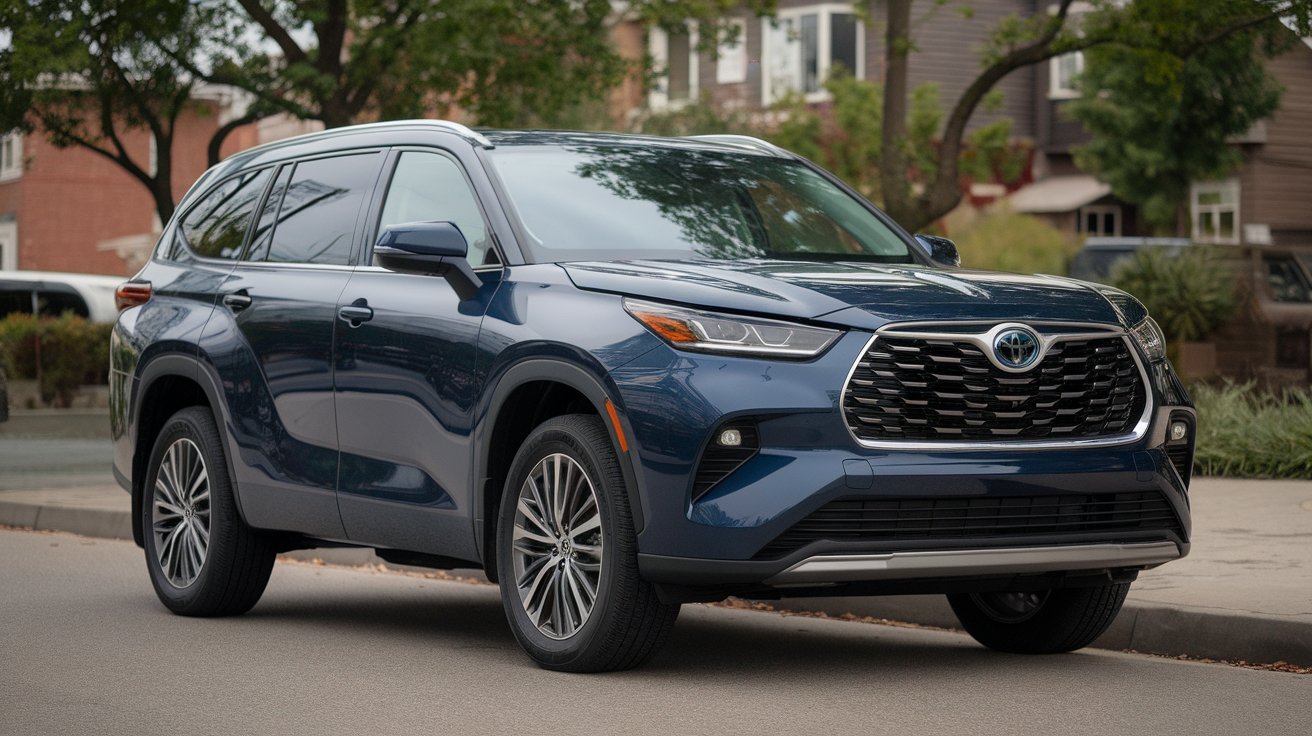
The 2024 Toyota Grand Highlander Platinum represents the upscale end of Toyota’s three-row Grand Highlander lineup. Introduced as part of the first Grand Highlander model year, the Platinum combines a spacious three-row cabin with premium technology, advanced safety equipment, a strong turbocharged engine, and available all-wheel drive. Toyota positioned the Grand Highlander around the idea of providing more usable passenger and cargo space than the regular Highlander, making it especially relevant to families who need a practical SUV without moving to a full-size body-on-frame vehicle.
For 2024, the gasoline-powered Grand Highlander Platinum uses a 2.4-liter turbocharged four-cylinder engine producing 265 horsepower and 310 lb-ft of torque, paired with an eight-speed automatic transmission. The Platinum also came with standard all-wheel drive in the U.S. gasoline lineup. Toyota listed a starting MSRP of $53,795 for the 2024 Grand Highlander Platinum.
2024 Toyota Grand Highlander Platinum Engine and Performance
The gasoline 2024 Toyota Grand Highlander Platinum uses Toyota’s 2.4-liter turbocharged inline-four engine. It produces 265 horsepower at 6,000 rpm and 310 lb-ft of torque from 1,700 to 3,600 rpm, giving the SUV useful low- and mid-range pulling power for everyday driving and highway travel. The engine is paired with a Direct Shift eight-speed automatic transmission.
The Platinum’s standard all-wheel-drive system provides additional traction in wet, snowy, or slippery conditions. Toyota also equipped the Grand Highlander with selectable drive modes, allowing drivers to adjust the vehicle’s behavior for different conditions.
Toyota’s published specifications give the gasoline Platinum an estimated 20 mpg city, 26 mpg highway, and 22 mpg combined. Actual fuel economy can vary with driving conditions, traffic, weather, vehicle load, tire selection, and driving habits.
For buyers who prioritize efficiency and acceleration, it is important to distinguish the gasoline Platinum from the Grand Highlander Hybrid MAX Platinum. The latter uses a different turbocharged hybrid powertrain producing 362 net combined horsepower and 400 lb-ft of torque, with its own performance and fuel-economy characteristics.
Grand Highlander Platinum Interior and Three-Row Space
Interior space is one of the defining characteristics of the 2024 Toyota Grand Highlander Platinum. Toyota designed the Grand Highlander specifically to provide a more accommodating three-row interior, including a third row with 33.5 inches of legroom and approximately 20.6 cubic feet of cargo space behind the third row.
The Platinum trim adds a more premium environment with leather-trimmed seating, heated and ventilated second-row outboard seats, a leather-trimmed heated steering wheel, and other upscale equipment. Depending on configuration and market, seating is generally arranged for seven passengers with second-row captain’s chairs.
The extended dimensions also make the vehicle practical for road trips. With all three rows available, passengers can travel without requiring the third row to be reserved only for children. Folding the rear seats creates substantially more room for luggage, groceries, sports equipment, and other large items.
The Grand Highlander’s overall dimensions are approximately 201.4 inches long, 78.3 inches wide, and 70.1 inches tall, with a 116.1-inch wheelbase.
2024 Grand Highlander Platinum Technology and Infotainment
The 2024 Toyota Grand Highlander Platinum received a substantial technology package designed around family convenience and connected driving. A 12.3-inch Toyota Audio Multimedia touchscreen serves as the central infotainment display, while wireless Apple CarPlay and Android Auto compatibility makes smartphone integration straightforward.
Platinum equipment also includes an 11-speaker JBL Premium Audio system, providing a more advanced sound system than the standard setup. Wireless smartphone charging is available, while multiple USB-C ports help passengers keep their devices charged during longer journeys.
Another notable feature is the 10-inch color Head-Up Display, which can project useful information such as vehicle speed and road-sign information into the driver’s field of view. The Platinum also offers a Digital Rearview Mirror with HomeLink, adding convenience when the rear cabin view is obstructed by passengers or cargo.
The available Panoramic View Monitor provides a broader view around the vehicle, which can be particularly useful when maneuvering a large three-row SUV through tight parking areas.
Luxury Features and Exterior Design
The Platinum sits above the XLE and Limited trims in the 2024 gasoline Grand Highlander range, so its exterior and interior equipment reflect its premium positioning. Toyota equipped it with 20-inch silver multi-spoke wheels, LED lighting, heated power-folding exterior mirrors, and a height-adjustable foot-activated power liftgate.
A power tilt-and-slide panoramic roof with a power sunshade is also part of the Platinum equipment, giving the cabin a more open appearance and allowing additional natural light into the first and second rows.
The design remains relatively restrained compared with some aggressively styled three-row SUVs. Its larger dimensions give it a substantial road presence while retaining the general crossover proportions associated with the Grand Highlander.
For buyers interested in appearance and practicality together, the Platinum’s larger wheels, premium lighting, panoramic roof, and upscale interior materials create a noticeably more feature-rich configuration.
Towing, Cargo Capacity, and Everyday Practicality
The 2024 Toyota Grand Highlander Platinum has a maximum towing capacity of up to 5,000 pounds when properly equipped, according to Toyota’s published specifications. Toyota notes that towing should never exceed the vehicle’s published capacity.
That capacity gives the Platinum useful versatility for towing compatible recreational equipment, small trailers, or other loads. The exact allowable trailer weight can depend on equipment and conditions, so owners should consult the vehicle’s documentation before towing.
Cargo flexibility is another important advantage. The Grand Highlander provides 20.6 cubic feet behind the third row, while maximum cargo capacity reaches approximately 97.5 cubic feet with the appropriate seats folded.
This combination means the SUV can remain practical when all three rows are occupied. Families do not necessarily have to choose between carrying seven passengers and carrying luggage.
2024 Toyota Grand Highlander Platinum Safety Features
Safety technology is an important part of the Platinum package. The 2024 Grand Highlander includes Toyota Safety Sense 3.0, Toyota’s suite of active safety and driver-assistance technologies. The package includes systems designed to assist with collision avoidance, lane positioning, adaptive cruise control, and other driving situations.
The Platinum also includes Blind Spot Monitor with Rear Cross-Traffic Alert, helping provide additional awareness around the vehicle. Parking and maneuvering assistance is particularly useful given the Grand Highlander’s substantial exterior dimensions.
Toyota also provided multiple airbags and its broader Star Safety System, adding a range of electronic safety systems intended to help maintain vehicle control.
Driver-assistance technology should be viewed as support rather than a replacement for attentive driving. Drivers remain responsible for steering, braking, monitoring traffic, and following road conditions.
2024 Toyota Grand Highlander Platinum vs. Hybrid MAX Platinum
One of the most important distinctions for shoppers is the difference between the gasoline Platinum and Hybrid MAX Platinum.
The gasoline Platinum starts at $53,795 and uses the 265-horsepower 2.4-liter turbocharged engine. The 2024 Hybrid MAX Platinum starts at $58,475 and combines a turbocharged 2.4-liter engine with electric motors for 362 net combined horsepower and 400 lb-ft of torque. Toyota lists the Hybrid MAX Platinum at 26 mpg city and 27 mpg highway.
Both versions provide three-row practicality and premium Platinum equipment, but they target somewhat different priorities. The gasoline version offers a simpler conventional powertrain, while the Hybrid MAX emphasizes stronger output and hybrid-assisted efficiency.
Final Thoughts on the 2024 Toyota Grand Highlander Platinum
The 2024 Toyota Grand Highlander Platinum combines generous three-row space with premium equipment, modern technology, standard all-wheel drive, and a capable turbocharged engine. Its 20.6 cubic feet of cargo space behind the third row, 97.5-cubic-foot maximum cargo capacity, and available 5,000-pound towing capability make it a versatile family SUV.
The Platinum’s 12.3-inch multimedia touchscreen, JBL audio system, Head-Up Display, panoramic roof, leather-trimmed interior, heated and ventilated second-row seats, and advanced safety technology further distinguish it from lower Grand Highlander trims.
As the first model year of the Grand Highlander, the 2024 Platinum established the formula that made this SUV notable: three-row usability without giving up practical cargo room. For buyers evaluating a used 2024 model today, checking the vehicle’s exact powertrain, equipment, maintenance history, mileage, and condition is essential because specifications and options can vary by individual vehicle.
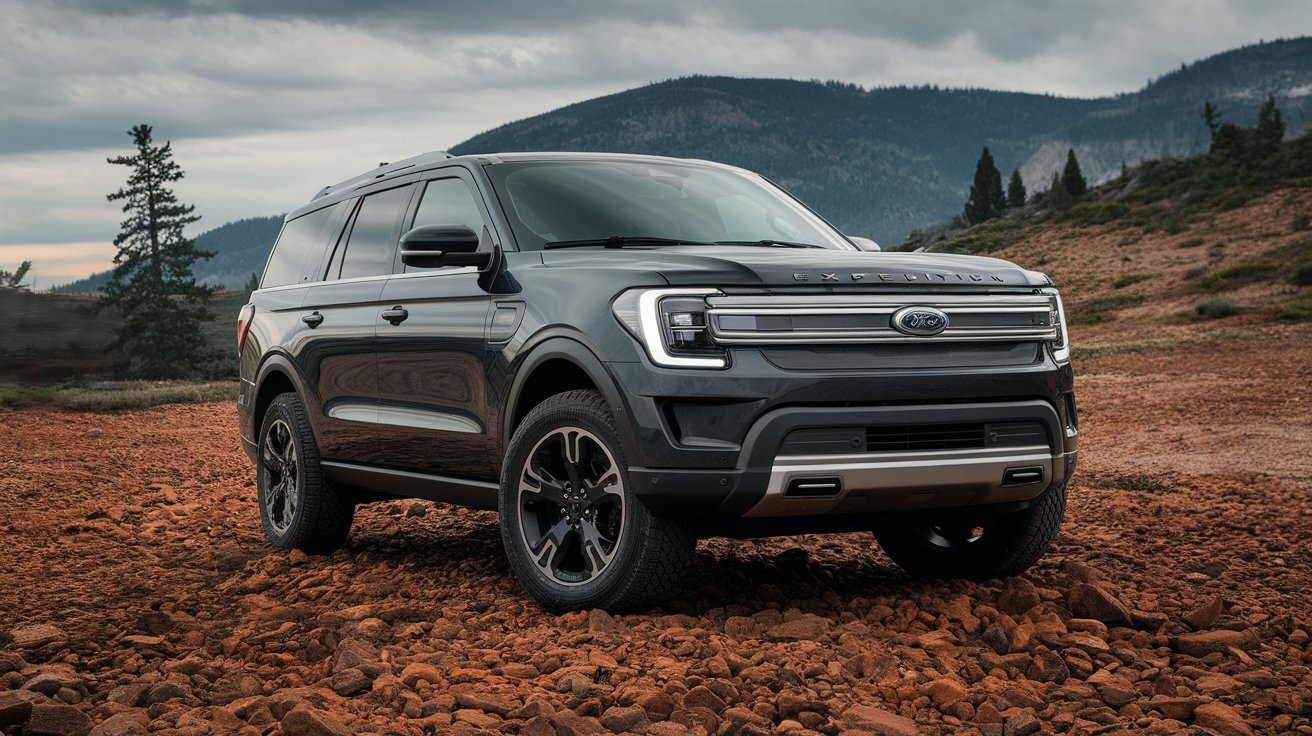
The 2026 Ford Expedition MAX is the long-wheelbase version of Ford’s full-size Expedition SUV, designed for buyers who need substantial passenger room, cargo capacity, and towing capability. For 2026, the Expedition MAX continues with a 3.5-liter EcoBoost V6, a 10-speed automatic transmission, and a choice of rear-wheel drive or four-wheel drive depending on configuration. Ford’s official technical specifications identify the MAX as the long-wheelbase (LWB) Expedition, while the regular Expedition is the shorter-wheelbase version.
With its extended body, large cabin, flexible seating, modern technology, and available high-output engine, the 2026 Ford Expedition MAX is aimed at families, travelers, and drivers who regularly carry people and equipment. Its long body is particularly useful when all three rows are occupied because the additional length creates a generous cargo area behind the third row.
2026 Ford Expedition MAX Engine and Performance
The standard powertrain in much of the 2026 Ford Expedition MAX lineup is a twin-turbocharged 3.5-liter EcoBoost V6 producing 400 horsepower and 480 lb-ft of torque. It works with a 10-speed automatic transmission, giving the large SUV a broad range of gearing for highway cruising, acceleration, and towing. Ford also offers a high-output version of the 3.5-liter EcoBoost producing 440 horsepower and 510 lb-ft of torque on applicable configurations.
The MAX is not simply focused on carrying passengers comfortably. Its powertrain gives it the capability expected from a full-size SUV, particularly when properly equipped for towing. Four-wheel-drive configurations add traction for challenging weather and certain off-road conditions, while the available Tremor configuration is designed with more serious off-road capability in mind.
The 10-speed automatic transmission also contributes to the Expedition’s flexible driving character. Rather than relying on a small number of gears, it can keep the engine within a useful operating range as road speed and load conditions change.
2026 Ford Expedition MAX Interior and Passenger Space
One of the biggest reasons to consider the 2026 Ford Expedition MAX is its emphasis on usable interior space. The long-wheelbase body provides more room for cargo while retaining the Expedition’s three-row configuration.
Ford offers flexible seating arrangements, including configurations that can accommodate up to eight passengers depending on trim and equipment. The second row can be configured with a bench or available captain’s chairs, while the third row is designed to remain useful for passengers rather than serving only as occasional seating.
The MAX is particularly practical for families because the third row does not have to mean sacrificing all available luggage space. Ford’s power-folding third row can be controlled from the passenger area or cargo area, making it easier to switch between passenger and cargo configurations.
Higher trims add more premium materials and comfort-oriented features. Available equipment includes heated second-row seats, a panoramic roof, ambient lighting, premium seating materials, and other convenience features. The exact equipment varies according to trim and package.
Cargo Space and Practicality in the Expedition MAX
The extended body is the defining advantage of the 2026 Ford Expedition MAX. According to Car and Driver’s specifications, the MAX provides approximately 36 cubic feet of cargo space behind the third row, while folding the second and third rows creates a substantially larger load area.
This makes the MAX useful for road trips, sports equipment, luggage, family shopping, and other situations where passengers and cargo need to travel together. A particularly useful feature is Ford’s Split Gate, which combines a conventional liftgate-style upper section with a lower section that functions similarly to a pickup tailgate.
The design can make loading heavier or awkwardly shaped items easier. The lower section can also provide a convenient surface when organizing cargo or accessing equipment.
For buyers who regularly use all three rows, the MAX’s additional cargo capacity can be more meaningful than simply adding another storage compartment. It allows the vehicle to remain practical without requiring the third row to be folded every time luggage is loaded.
Technology and Interior Features for 2026
Technology is another major part of the 2026 Ford Expedition MAX experience. Ford equips the Expedition with a large 24-inch panoramic display, accompanied by a 13.2-inch center-stack touchscreen on applicable configurations.
The expansive dashboard display provides a central area for vehicle information and connected features, while the center screen handles many infotainment functions. Wireless smartphone integration and other connectivity features are available, helping passengers stay connected during longer journeys.
Available Ford BlueCruise technology can provide hands-free highway driving assistance on compatible roads when properly equipped and when the driver meets the system’s requirements. Driver-assistance features vary by trim and package, so equipment should be checked carefully when comparing individual vehicles.
The interior technology is complemented by practical equipment such as flexible seating, available panoramic roof options, cargo-management accessories, and power-folding seats.
2026 Ford Expedition MAX Towing Capability
Towing is one of the most important strengths of the Expedition family. However, the exact towing capacity of a 2026 Ford Expedition MAX depends on engine, drivetrain, axle ratio, equipment, and trailer configuration.
Ford’s 2026 towing guide lists different maximum loaded trailer weights for different Expedition configurations. For the MAX, the published figures vary by configuration, with properly equipped models reaching substantial towing capacities.
A Heavy-Duty Trailer Tow Package is available on applicable models and adds equipment intended to support serious towing use. Trailer sway control and other towing-related technologies are also available.
Because towing capacity depends on the exact vehicle configuration, we should check the vehicle’s window sticker, owner’s information, and Ford’s towing specifications rather than assuming that every Expedition MAX has the same maximum rating.
2026 Ford Expedition MAX Trims and Off-Road Capability
Ford’s 2026 technical specifications list Active, Tremor, Platinum, and King Ranch trim levels for the Expedition lineup.
The Active trim focuses on everyday practicality and family-oriented equipment. King Ranch adds a more distinctive premium character, while Platinum emphasizes luxury features and upscale interior appointments.
The Tremor is particularly different because it is designed for enhanced off-road capability. It uses the available 440-horsepower high-output 3.5-liter EcoBoost V6, along with features such as 33-inch all-terrain tires, a retuned suspension, off-road-oriented equipment, and additional underbody protection.
Buyers who primarily drive on paved roads may prioritize comfort, technology, and cargo flexibility, while those who frequently travel over rough terrain may pay closer attention to four-wheel drive, ground clearance, tires, suspension tuning, and available off-road equipment.
2026 Ford Expedition MAX Dimensions, Fuel Economy, and Everyday Use
The long-wheelbase MAX measures approximately 221.7 inches in length with a 131.5-inch wheelbase, according to published specifications for the model. Its substantial dimensions are part of what creates the spacious interior and cargo area.
Fuel economy varies according to drivetrain, trim, engine output, wheels, and equipment. One 2026 Expedition MAX configuration is listed at approximately 15 mpg city and 22 mpg highway, with an 18-mpg combined rating.
As a large, powerful SUV, the MAX is built around capability and space rather than small-vehicle fuel consumption. Its large fuel tank helps provide useful highway range, which can be valuable during long-distance travel.
The vehicle’s size should also be considered for everyday driving. Parking garages, narrow streets, residential driveways, and older parking spaces can be more challenging with a full-size long-wheelbase SUV. Buyers should consider their regular driving environment before choosing the MAX over the standard-length Expedition.
Final Thoughts on the 2026 Ford Expedition MAX
The 2026 Ford Expedition MAX combines a long-wheelbase body with strong EcoBoost power, three-row seating, extensive cargo room, modern technology, and serious towing capability. Its greatest practical advantage is the ability to carry passengers in all three rows while retaining useful cargo capacity behind them.
The available 400-horsepower 3.5-liter EcoBoost V6, optional 440-horsepower high-output engine, 10-speed automatic transmission, flexible seating, Split Gate, large digital displays, and available four-wheel drive give the Expedition MAX a broad range of capabilities.
For families and drivers who regularly need maximum interior flexibility, the MAX’s additional length makes a meaningful difference. At the same time, its large exterior dimensions and fuel requirements are important considerations for everyday ownership. By comparing the available trims, drivetrain choices, towing equipment, and interior configurations, buyers can identify the 2026 Ford Expedition MAX setup that best matches their particular transportation needs.

Urban Jürgensen is one of the historic names in European haute horlogerie. With roots reaching back to Copenhagen in 1773, the name is associated with generations of Danish and Swiss watchmakers, precision chronometers, elegant pocket watches, and highly finished mechanical wristwatches.
Unlike many luxury watch brands whose histories are relatively straightforward, the story of Urban Jürgensen is closely connected to an entire watchmaking dynasty. Its development involved Copenhagen, Switzerland, France and England, while figures such as Abraham-Louis Breguet, Ferdinand Berthoud and John Arnold influenced the education and technical development of Urban Jürgensen himself.
The brand has experienced several periods of ownership and revival. Its latest modern chapter began after investors acquired the company in 2021, with independent watchmaker Kari Voutilainen placed at the helm. In 2025, the revived brand introduced three new watches that drew heavily on its historical identity.
The Origins of Urban Jürgensen
The roots of the Jürgensen watchmaking family can be traced to Jørgen Jürgensen, who established his watchmaking activities in Copenhagen during the late 18th century. In 1773, he applied to the Copenhagen watchmakers’ guild for permission to produce a repeating watch, an important milestone in the development of the family business.
The business became associated with the name Larpent & Jürgensen, and approximately 4,000 watches bearing that name were produced between 1773 and 1814, according to historical research presented by Phillips.
Jørgen’s son Urban Jürgensen, born in Copenhagen in 1776, would eventually become the most important figure associated with the family’s early watchmaking legacy.
His education took him beyond Denmark. Urban studied and worked with some of Europe’s most respected watchmakers, including Abraham-Louis Breguet and Ferdinand Berthoud in Paris, and John Arnold and John Brockbank in London. This international education exposed him to some of the most advanced approaches to precision timekeeping available at the beginning of the 19th century.
Urban Jürgensen’s Contribution to Precision Watchmaking
Urban Jürgensen returned to Copenhagen in 1801 after years of training abroad. He brought with him extensive technical knowledge and equipment intended to help develop precision watchmaking in Denmark.
His interests extended beyond simply producing attractive watches. Precision, chronometry and technical reliability were central to his work.
Historical sources credit Urban with numerous technical developments. One example is his 1798 work involving a hardened-steel cylinder escape wheel, designed to reduce wear and improve performance. His work also included research into springs, chronometers and precision instruments.
Urban also became an important author on horology. His book on precision time measurement became an influential reference for watchmakers, demonstrating that his contribution extended beyond practical manufacturing into the documentation and teaching of watchmaking knowledge.
His achievements earned recognition from the Danish establishment. He received royal patronage and supplied watches and chronometers to the Danish court and Admiralty. He was also admitted to the Royal Danish Academy of Sciences, an unusual honor for a craftsman of his era.
The Jürgensen Family and Swiss Watchmaking
After Urban Jürgensen died in 1830, his sons continued the family tradition. The company became known as Urban Jürgensen & Sønner, while his son Jules Frederik Jürgensen eventually established a major watchmaking presence in Switzerland.
Jules Frederik moved to Le Locle, one of Switzerland’s historic watchmaking centers, where he developed high-end watches and chronometers.
This Danish-Swiss connection became an important part of the Jürgensen story. The family’s work combined Danish horological heritage with Swiss manufacturing expertise, helping the name survive through changing generations and markets.
Jules Frederik became particularly successful with sophisticated pocket watches and precision timepieces. His work received medals and honors, and his innovations included case and hand-setting mechanisms that became associated with the broader Jürgensen style.
The family’s production included marine chronometers, astronomical clocks, chronometers and complicated pocket watches, reinforcing the company’s reputation for precision rather than mass production.
The Modern Urban Jürgensen Revival
Urban Jürgensen’s history did not end with the original family dynasty. During the 20th century, the company experienced ownership changes and difficult periods.
A particularly important revival began with Peter Baumberger, a watch collector and entrepreneur, who acquired the Urban Jürgensen name and sought to restore its reputation for high-end independent watchmaking. He worked with the highly respected British watchmaker Derek Pratt, whose technical expertise played a major role in the modern interpretation of the brand.
During this era, Urban Jürgensen produced small-series mechanical watches characterized by details such as teardrop lugs, stepped cases and hand-finished dials. References such as the Reference 1, Reference 2 and Reference 3 became representative of this modern interpretation of the historic brand.
The company also received renewed international recognition. In 2014, its Reference 1142C won the men’s watch category at the Grand Prix d’Horlogerie de Genève, featuring a patented chronometer escapement.
Urban Jürgensen Watches and Design Philosophy
One of the defining characteristics of Urban Jürgensen watches is the combination of traditional craftsmanship and understated design.
Rather than relying exclusively on large cases or highly recognizable sports-watch styling, historic and modern Urban Jürgensen pieces frequently emphasize proportion, finishing, legibility and mechanical detail.
Important design signatures include teardrop-shaped lugs, carefully finished cases, classical hands and finely decorated dials. Hand-executed guilloché has also been an important element in the brand’s visual language.
The appeal of these watches is therefore closely connected to traditional haute horlogerie. Collectors often focus not only on the appearance of a watch but also on its movement architecture, finishing, escapement technology and historical importance.
This makes Urban Jürgensen particularly interesting to enthusiasts who appreciate independent watchmaking and mechanical craftsmanship.
The 2021 Revival and New Urban Jürgensen Watches
Another major chapter began in 2021, when a group of investors acquired Urban Jürgensen and placed independent master watchmaker Kari Voutilainen in a leading role. Alex Rosenfield subsequently became involved in the company’s leadership, particularly in marketing and sales.
The renewed brand officially introduced a new generation of watches in June 2025.
The launch consisted of three models: UJ-1, UJ-2 and UJ-3. The watches were designed to connect the company’s historic identity with contemporary independent watchmaking. Reports on the collection describe handmade elements, historically inspired cases and newly developed movements.
The UJ-1 draws inspiration from a historic Urban Jürgensen oval pocket watch, while the UJ-2 emphasizes extensive hand finishing and craftsmanship. The UJ-3 incorporates a perpetual calendar designed around an exceptionally long accuracy cycle.
These watches demonstrate that the modern Urban Jürgensen identity is not simply a reproduction of historical pieces. Instead, the current approach combines heritage, independent watchmaking and contemporary technical development.
Why Urban Jürgensen Matters in 2026
In 2026, Urban Jürgensen represents a distinctive part of the independent luxury-watch landscape. Its importance comes from the unusual depth of its history and the relationship between Danish horological heritage and Swiss watchmaking.
The name has survived more than two centuries of technological changes, ownership transitions and changing consumer tastes. Its story includes pioneering pocket-watch production in Denmark, precision chronometers, international apprenticeships, complicated mechanical watches and several modern revivals.
The latest generation under Kari Voutilainen is particularly significant because it attempts to reconnect the contemporary company with the technical and aesthetic principles that made the historic name important. The 2025 collection provides evidence of this approach through hand finishing, traditional decorative techniques and new mechanical calibres.
For collectors researching Urban Jürgensen watches, understanding this history is essential. Different periods of production can represent very different design philosophies and technical approaches.
Final Thoughts on Urban Jürgensen
Urban Jürgensen is much more than the name on a luxury watch dial. It represents a remarkable Danish watchmaking dynasty whose influence extended from Copenhagen to the major horological centers of Europe.
Urban Jürgensen himself trained with legendary watchmakers and became an important figure in precision timekeeping. His sons continued the tradition, while later generations and independent watchmakers helped preserve and reinvent the name.
The brand’s modern history is equally fascinating, particularly its revival under Peter Baumberger and Derek Pratt and its subsequent rebirth under Kari Voutilainen.
With the introduction of the UJ-1, UJ-2 and UJ-3, Urban Jürgensen entered 2026 with a new generation of watches that connects historical design language with modern independent craftsmanship. For anyone interested in haute horlogerie, Danish watchmaking, precision chronometry and collectible mechanical watches, the Urban Jürgensen story remains one of the most distinctive chapters in European horology.
Blog
Hyundai IONIQ 5 EV: Complete Guide to Design, Performance, Range, Charging, and Technology in 2026
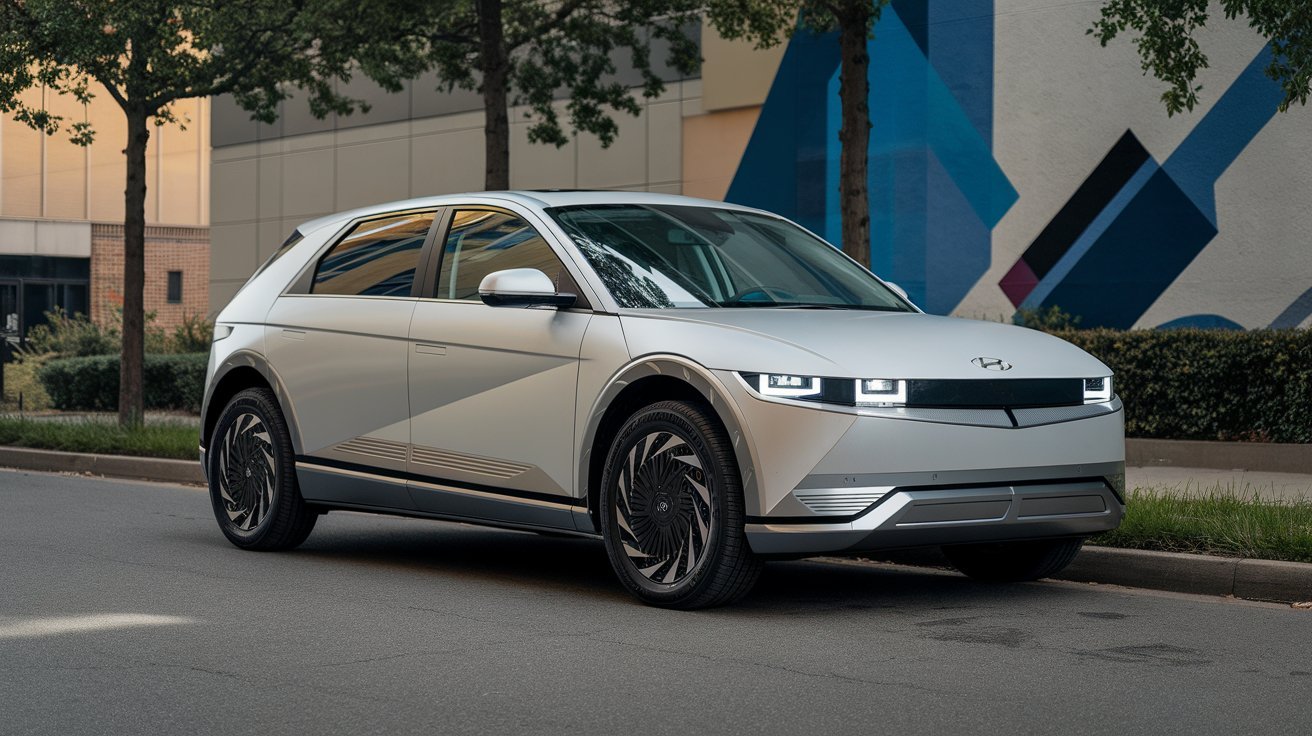
The Hyundai IONIQ 5 EV has become one of the most influential electric vehicles in the automotive industry. Since its introduction, the IONIQ 5 has earned praise for its futuristic design, advanced technology, impressive driving range, and ultra-fast charging capabilities. Built on Hyundai’s dedicated Electric Global Modular Platform (E-GMP), this electric crossover has helped redefine what consumers expect from modern EVs.
In 2026, the Hyundai IONIQ 5 continues to be a leading choice for drivers seeking a practical, stylish, and highly capable electric vehicle. With improved battery technology, expanded charging access, enhanced safety systems, and a spacious interior, the IONIQ 5 remains one of the most competitive EVs on the market. Hyundai has also introduced larger battery options and additional technology upgrades to further improve the ownership experience.
Whether used for daily commuting, family transportation, or long-distance travel, the Hyundai IONIQ 5 EV offers a combination of efficiency, innovation, and comfort that appeals to a wide range of drivers.
Bold and Futuristic Exterior Design
One of the first things people notice about the Hyundai IONIQ 5 EV is its distinctive design. Unlike many traditional SUVs, the IONIQ 5 combines retro-inspired styling with futuristic elements that create a unique road presence.
Key exterior highlights include:
- Parametric pixel LED lighting
- Aerodynamic body styling
- Flush door handles
- Modern alloy wheel designs
- Wide stance for improved stability
- Distinctive front and rear lighting signatures
- Crossover-inspired proportions
The IONIQ 5’s design philosophy focuses on clean lines, efficient aerodynamics, and modern aesthetics. Updated versions also feature redesigned bumpers, refreshed wheel options, and improved exterior detailing.
Its eye-catching appearance helps distinguish it from other electric vehicles while maintaining excellent practicality.
Electric Performance and Driving Experience
The Hyundai IONIQ 5 EV delivers impressive performance across multiple powertrain configurations. Buyers can choose between rear-wheel-drive and all-wheel-drive models depending on their driving preferences.
Performance highlights include:
- 225 horsepower in long-range RWD models
- 320 horsepower in dual-motor AWD models
- Instant electric torque
- Smooth acceleration
- Responsive steering
- Quiet cabin operation
The all-wheel-drive versions provide strong acceleration and enhanced traction in various weather conditions, while rear-wheel-drive models maximize efficiency and driving range. Hyundai’s electric platform also contributes to balanced handling and a comfortable ride quality.
Many automotive experts praise the IONIQ 5 for delivering a driving experience that feels both refined and engaging.
Impressive Driving Range and Battery Technology
Range remains one of the most important considerations for EV buyers, and the Hyundai IONIQ 5 EV performs exceptionally well in this area.
Depending on trim and configuration, the 2026 IONIQ 5 offers:
- Up to 318 miles of EPA-estimated range
- Approximately 290 miles for AWD models
- 245 miles for standard-range versions
- Available 84 kWh battery pack
- Advanced lithium-ion battery technology
Hyundai has continuously improved battery efficiency and energy management systems, helping drivers travel longer distances with fewer charging stops. Certain international versions also feature enhanced battery packs designed to increase overall driving range.
The larger battery options make the IONIQ 5 especially attractive for long-distance drivers and EV enthusiasts.
Ultra-Fast Charging Capabilities
One of the biggest advantages of the Hyundai IONIQ 5 EV is its industry-leading charging performance.
The vehicle utilizes an advanced 800-volt electrical architecture, allowing extremely fast charging speeds compared to many competitors.
Charging highlights include:
- 10% to 80% charging in approximately 20 minutes
- Up to 178 miles of range added in about 15 minutes
- 350-kW DC fast-charging compatibility
- Home Level 2 charging support
- Public charging network compatibility
- NACS charging support for expanded access
The addition of NACS charging compatibility provides access to a large number of Tesla Superchargers, significantly increasing charging convenience for owners. Hyundai’s charging technology remains one of the strongest selling points of the IONIQ 5.
For many drivers, this fast-charging capability reduces range anxiety and improves overall EV usability.
Premium Interior Comfort and Practicality
Inside the cabin, the Hyundai IONIQ 5 EV offers a spacious and highly functional environment.
Interior features commonly include:
- Dual 12.3-inch displays
- Flexible seating arrangements
- Premium upholstery options
- Heated and ventilated seats
- Wireless device charging
- Advanced climate controls
- Large cargo capacity
- Flat floor design
The dedicated EV platform allows Hyundai to maximize interior space. Passengers enjoy generous legroom and headroom, while the cargo area provides ample storage for luggage, groceries, and recreational equipment.
The modern cabin design emphasizes simplicity, comfort, and technology, creating a premium experience that rivals more expensive electric vehicles.
Advanced Technology and Safety Features
Technology plays a central role in the appeal of the Hyundai IONIQ 5 EV.
Key technology features include:
- 12.3-inch touchscreen infotainment system
- Digital instrument cluster
- Navigation system
- Connected vehicle services
- Over-the-air updates
- Wireless smartphone integration
- Voice controls
- Remote vehicle functions
The updated models feature Hyundai’s advanced connected car technologies and improved software functionality. Some versions also include Connected Car Over-The-Air (C-OTA) update capability for continuous software improvements.
Safety technologies include:
- Highway Driving Assist 2
- Forward collision avoidance
- Blind-spot monitoring
- Lane-keeping assistance
- Adaptive cruise control
- Parking collision avoidance
- Rear and side parking sensors
These systems help improve driver confidence and enhance overall vehicle safety.
Why the Hyundai IONIQ 5 EV Stands Out in 2026
The electric vehicle market continues to grow rapidly, but the Hyundai IONIQ 5 EV remains one of the most compelling choices available.
Major strengths include:
- Outstanding driving range
- Ultra-fast charging technology
- Futuristic design
- Spacious interior
- Advanced safety systems
- Strong performance options
- Excellent technology integration
- Access to expanded charging networks
Industry reviewers continue to rank the IONIQ 5 among the top electric vehicles thanks to its blend of practicality, efficiency, and innovation. It remains a benchmark for what a modern electric crossover can achieve.
Conclusion
The Hyundai IONIQ 5 EV represents one of the most successful electric vehicles of the modern era. Combining innovative design, impressive driving range, ultra-fast charging, advanced technology, and everyday practicality, it offers an exceptional ownership experience for drivers transitioning to electric mobility.
As Hyundai continues refining and improving the IONIQ 5, the model remains a leader in the competitive EV segment. Whether you prioritize efficiency, technology, comfort, or performance, the Hyundai IONIQ 5 EV delivers a well-rounded package that continues to impress drivers in 2026 and beyond.



 Celebrity3 months ago
Oona Gray Seppala: Everything You Need to Know About Sarah Rafferty’s Daughter
- Blog1 month ago
0844 879 1719: Who Called Me and Is This Number a Scam in 2026?
- Celebrity3 months ago
Judy Helkenberg: Biography, Early Life, Career, Personal Journey, and Legacy
- News3 months ago
Carl Ellan Kelley: The Untold Story, Biography, Family, and Legacy
- Social Media2 months ago
TikTok Coins: The Complete 2026 Guide to Buying, Using, Prices, Gifts, and Safety
- Celebrity2 months ago
Tanya Tehanna Bio: Career, Background, Achievements, and Public Recognition in 2026
- Food2 months ago
Best Pollo al Champiñón Near Me (2026): The Complete Guide to Authentic Creamy Mushroom Chicken
- Social Media2 months ago
JoJo Siwa TikTok: Career Growth, Viral Moments, Content Style, and Social Media Influence in 2026